Stone-Ground or Steel-Rolled: What the Mill Changes in Cornmeal
Stone-ground or steel-rolled cornmeal changes a dish’s texture and flavor; learn how to read the bag and choose the right grind for familiar Southern cooking.
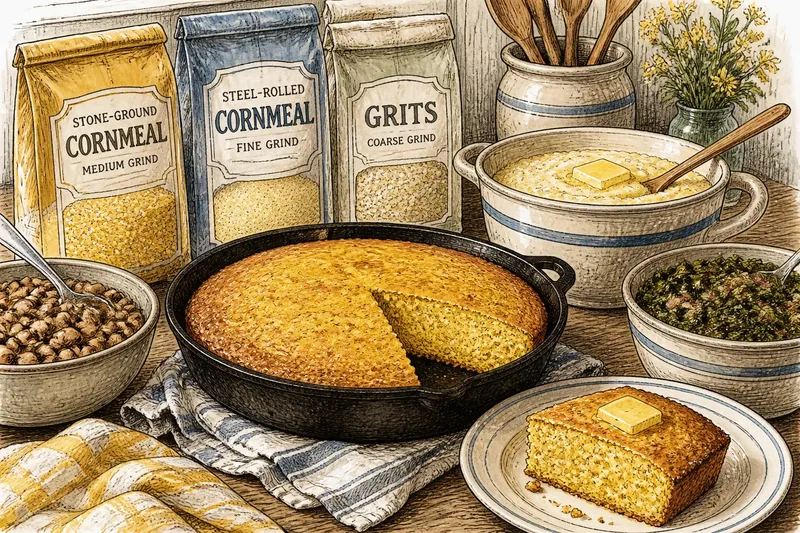
Stone-ground or steel-rolled cornmeal can make the difference between a skillet of cornbread with visible flecks and one with a finer, more even crumb. If you are standing in a grocery aisle deciding which bag belongs in the basket, the useful question is not which method is superior. It is what texture you want in the dish, and how much the mill’s choices matter to it.
Consider an invented situation. Say you are making a Southern supper for a few friends: skillet cornbread alongside beans, with a pot of creamy grits for anyone who wants them. The store has stone-ground cornmeal, steel-rolled cornmeal and labels that offer more confidence than explanation. Choosing by the mill name alone could send you home with a texture you did not intend. Looking at the grain, the ingredient list and the dish gives you a better route.
Stone-ground cornmeal keeps more of the kernel’s character
A stone mill crushes corn between two millstones. Depending on the mill and how the corn is prepared, the resulting meal can include more of the kernel’s germ and outer bran than finely sifted, roller-milled meal. Those parts contribute color, aroma and a fuller corn flavor, as well as visible specks in the finished meal.
Stone-ground does not name one exact texture. A mill can produce coarse, medium or fine meal, and it can sift out some of the bran or germ. Two bags bearing the same words may therefore behave differently. Look through a clear section of the package if available, or read the label for a stated grind. The meal may look golden and irregular, with grains you can distinguish, or it may be relatively fine and uniform.
That variation is part of the point. A coarser stone-ground meal gives cornbread a more pronounced, grainy bite; a finer one can still bring a fuller corn taste without making each bite conspicuously gritty. For cooks who like a distinctly textured crumb, the mill name is a clue, not a complete specification.
Steel milling tends toward consistency and a finer texture
Steel roller mills use rollers to break and reduce the corn. The process can make a fine, even meal, and milling and sifting can separate parts of the kernel to create a more uniform product. Many familiar supermarket bags of cornmeal are steel-milled, though the label and grind remain more useful than assumptions based on the display.
Uniformity has a practical effect in a batter. Fine, evenly sized grains distribute through the wet ingredients without the larger pieces standing out as much. The result is often a smoother-feeling crumb, which suits cooks who want cornbread to support the rest of the meal rather than announce its texture.
Steel-milled cornmeal is not automatically bland, and stone-ground meal is not automatically coarse. Corn variety, freshness, sifting and grind all shape what reaches the bowl. Think of milling like cutting vegetables with a sharp knife: the tool influences the result, but the size of the cut still matters. A package that identifies the grind tells you more about the meal’s likely behavior than a process name on its own.
Choose the grind for the dish, not the label’s romance
For skillet cornbread, medium or coarse meal can bring a hearty crumb and a little crunch. If you prefer a tender, even slice, fine meal is a reasonable choice. Southern cornbread varies by household and region, so the decision is not a test of authenticity. It is a choice about the texture you want beside the beans, greens or roast on the table.
For grits, check the product name rather than treating cornmeal as an interchangeable substitute. Grits are a coarser product, and their cooking behavior differs from fine meal. Stone-ground grits may retain more germ and bran, while other grits may be more uniform; either way, follow the package’s cooking directions because grind and processing affect how quickly the grains soften.
For cornmeal coating on fried fish or green tomatoes, a finer or medium meal can cling more evenly, while a coarser meal gives a more pronounced crust. In muffins and spoonbread, fine meal tends to make a more cohesive texture. If a recipe names a particular grind, use that as the starting point. If it does not, consider whether you want the corn to be noticeable as grains or integrated into a softer crumb.
Read the package for grind, ingredients and storage
Use the label and the meal’s appearance together. Check for:
- Grind: Fine, medium or coarse gives a clearer expectation than a mill method alone.
- Kernel details: Words such as whole-grain or degerminated indicate whether more of the germ and bran remain.
- Color and visible flecks: These can suggest variation in corn and milling, though color by itself does not identify the process.
- Ingredients: Plain cornmeal is different from a self-rising mix, which may include leavening and salt.
- Storage guidance: Whole-grain meal can be more sensitive to storage conditions because it retains more of the kernel’s oily germ.
Keep the package closed and store it as the label directs. A cool, dry cupboard may suit some products; others may call for refrigeration or freezing, particularly after opening. If the meal smells stale, rancid or otherwise off, do not try to disguise it in a strongly flavored batter. The mill’s character is useful only while the corn still tastes sound.
What should you choose for a familiar dish?
Which cornmeal works best for skillet cornbread?
Choose medium or coarse meal for a more noticeable grain and fine meal for a smoother crumb. If you are unsure, start with the grind named in the recipe, since the amount of liquid and the finished texture are connected.
Is stone-ground cornmeal always coarser?
No. Stone-ground meal can be fine, medium or coarse, and it may be sifted to remove some larger particles. Look for the stated grind and the meal’s appearance rather than relying on the mill name alone.
Can steel-rolled cornmeal be used for grits?
Use a product sold as grits when you want grits; cornmeal is generally finer and cooks into a different texture. The terms describe different products, not simply two labels for the same pot.
How should opened cornmeal be stored?
Follow the package directions and keep the meal protected from moisture and strong odors. Products retaining more of the germ may need cooler storage, so the label is the sensible guide.
The invented supper shows why the mill is only one clue
In the invented supper, suppose you choose medium stone-ground cornmeal for skillet cornbread because you want a more pronounced crumb, then buy a bag of grits specifically for the second dish. You check that the meal is plain rather than self-rising and store both products according to their labels. The expected result is a cornbread with more visible grain and a pot of grits with the texture the product is meant to provide. If the meal’s grind is finer than expected, the cornbread may feel smoother; the label has still helped you make an informed choice.
The lesson is modest: stone-ground or steel-rolled tells you how the corn was milled, but grind, sifting and what remains of the kernel tell you how it may eat. For the next bag of cornmeal, picture the finished dish rather than the millstone. Then choose the texture that belongs on your table, and let the corn do the rest.